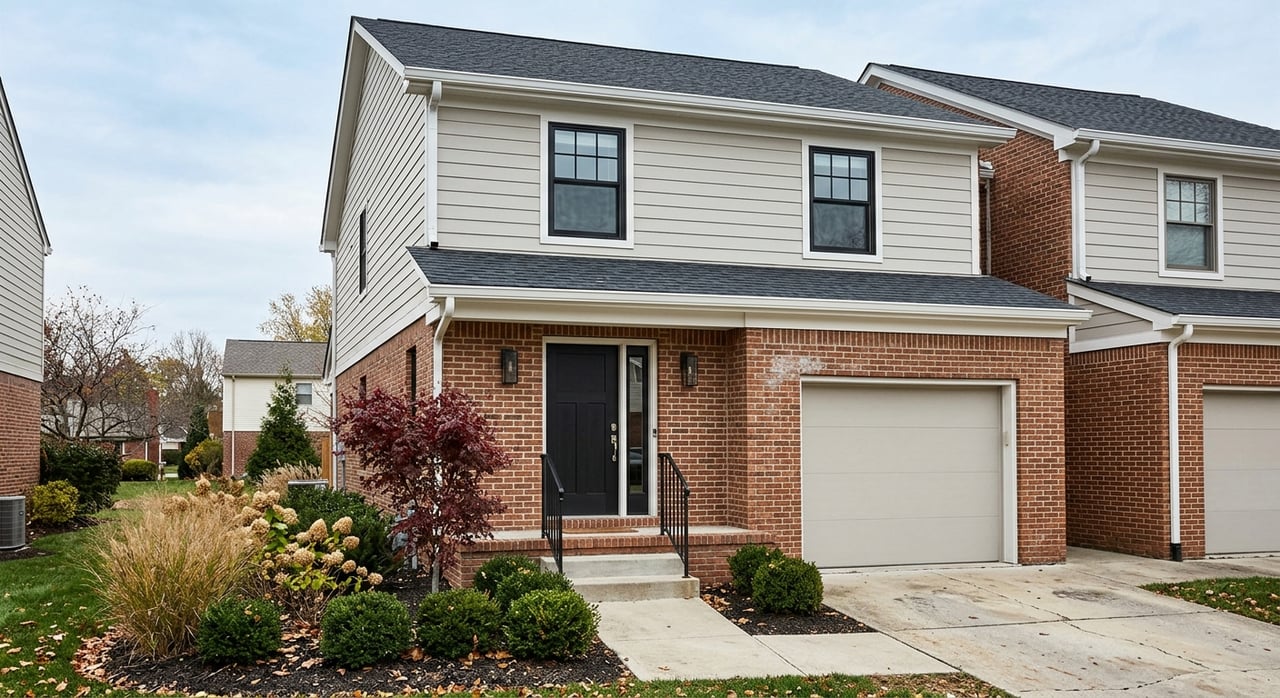
Townhomes Vs Houses In Naperville: How To Choose
July 2, 2026
July 2, 2026
Trying to decide between a townhome and a house in Naperville? That choice can shape your budget, monthly payment, maintenance load, and day-to-day lifestyle more than many buyers expect. If you want a clear way to compare the tradeoffs without getting lost in hype, this guide will help you think through cost, control, space, and long-term fit. Let’s dive in.
In Naperville, the price difference between attached and detached homes is meaningful. Based on MRED’s May 2026 local market update using trailing 12-month figures, the median sales price was $405,000 for attached single-family homes and $700,000 for detached single-family homes.
That is a gap of about $295,000 at the median. For many buyers, that difference alone can push the decision in one direction. It also explains why townhomes often become the practical entry point for buyers who want Naperville but need to stay disciplined on total cost.
Inventory also differs between the two categories. MRED reported 84 attached units and 181 detached units at month end, which means detached-home shoppers may see more options in raw numbers, even though budget can still narrow the field quickly.
List price is the starting point, not the decision. What really matters is your full monthly carrying cost.
According to the CFPB, your total monthly home payment can include:
This is where the townhome versus house decision gets more real. A townhome may cost much less upfront, but if the HOA dues are high, the monthly savings can narrow. A detached house may have a much higher purchase price, but the better comparison is how that price translates into your actual monthly outflow.
If you put less than 20 percent down, mortgage insurance will usually be part of the equation too. That is another reason to run the full payment before assuming the lower-price option is automatically the better fit.
Property taxes in Naperville are not one-size-fits-all. The city states that a homeowner’s tax amount is based on the individual property’s assessed value, and the annual levy and rate are compiled using data from the five townships that include Naperville.
DuPage County’s 2024 tax-rate booklet also shows that different Naperville taxing districts can carry different total rates. So if you are comparing a townhome and a detached house, do not assume a single citywide tax number will tell you the full story.
The practical move is simple: review the tax bill for each specific property. Two homes in Naperville can have very different tax costs, even if they seem similar at first glance.
For townhome buyers, HOA dues need their own line in the budget. The CFPB notes that HOA dues are usually paid directly to the association rather than included in the mortgage payment, and they can range from a few hundred dollars a month to more than $1,000.
That does not make HOA living bad. It just means you need to treat dues as a real monthly housing cost, not as a side note.
You should also look beyond the current fee amount. Fannie Mae notes that HOA fees can rise over time, and associations may charge special assessments for major one-time expenses.
A townhome often appeals to buyers who want a lower-maintenance setup. In many association-governed communities, the HOA maintains common areas and may also handle some exterior responsibilities.
That convenience comes with structure. Fannie Mae advises buyers to review the CC&Rs before making changes such as exterior painting, landscaping, or structural updates.
In plain terms, a townhome can reduce some of the exterior workload, but you usually give up some freedom in how the property looks and how changes get approved. If you like a more hands-off ownership experience, that can be a fair trade. If you want full control, it may feel limiting.
A detached house usually gives you more direct control over the lot and exterior. Because detached homes do not share walls, floors, or ceilings with another property, they often offer more independence and separation.
That independence is one reason many move-up buyers prefer detached homes. You may have more flexibility for future updates, outdoor use, and layout choices, depending on the property.
The flip side is that more responsibility lands on you. Maintenance, repairs, and exterior upkeep are less likely to be shared through an association structure, so you need to budget both time and money for that reality.
The townhome versus house decision is not just about square footage. It is also about how the home lives day to day.
Townhomes often feel more compact in practical use because they are attached and frequently multi-level. Detached homes more often provide greater separation between rooms and more flexibility in layout, though size and function still vary by floor plan and neighborhood.
That is why it helps to focus on how you use space. If you want simple living and can work well with a more vertical layout, a townhome may check the box. If you care more about separation, privacy, or future reconfiguration, a detached house may fit better.
A townhome is often the better fit when budget and convenience come first. In Naperville, the median price gap is large enough that attached housing can open the door to ownership for buyers who would be stretched too thin in the detached market.
A townhome may make sense if you want:
This path is often attractive for first-time buyers, buyers who want lower maintenance, or anyone who prefers to preserve more monthly cash flow. The key is making sure the HOA structure works for you, not against you.
A detached house is often the better fit when space, control, and long-term flexibility come first. If you are buying with future changes in mind, the added cost may be worth it.
A detached house may make sense if you want:
For many move-up buyers, those benefits justify the higher purchase price and the heavier maintenance load. The decision comes down to whether your budget supports that lifestyle without putting you in a weak monthly position.
If you want a simple filter, start here:
| Priority | Better Fit |
|---|---|
| Lower entry price | Townhome |
| Less exterior upkeep | Townhome |
| Space and privacy | Detached house |
| More control and customization | Detached house |
| Lower shared-rule environment | Detached house |
| Convenience and association support | Townhome |
This is not about one option being better in general. It is about which tradeoff matches your finances and how you actually want to live.
Before you choose a townhome or house in Naperville, review the same core numbers for each property. This is where a strategy-first approach protects you from making an emotional decision that does not hold up later.
Focus on these items:
This is also where disciplined analysis matters. A cheaper list price can still become an expensive monthly commitment, and a more expensive home can still be the better long-term fit if the space, control, and flexibility solve the right problem.
In Naperville, the median price gap between attached and detached homes is too large to ignore. For some buyers, that makes a townhome the smart move because it creates access, keeps the monthly burn more manageable, and reduces some of the upkeep burden.
For others, a detached house is the better buy because it offers the control, privacy, and long-term flexibility they know they will value over time. The smartest move is to compare the real monthly cost, the rules, the tax bill, and the maintenance burden before you commit.
If you want help pressure-testing a townhome versus house decision in Naperville, connect with Mike Thurman for a strategy-first consultation.
Stay up to date on the latest real estate trends.
Connect with Michael Thurman for expert guidance backed by real investment insight. Whether buying or selling, he’ll help you price strategically and move with confidence.