Wheaton's Median Home Price Is Hiding At Least Three Different Markets
October 1, 2026
October 1, 2026
Ask what a home costs in Wheaton and you'll get a clean answer: a median list price of $499,000 as of September 2026, according to Movoto's tracking, with homes moving in a median of 18 days. That number is accurate. It's also close to useless if you're trying to figure out what your actual budget buys, because Wheaton isn't one housing market wearing one price tag. It's at least three, and they don't compete with each other for the same buyer.
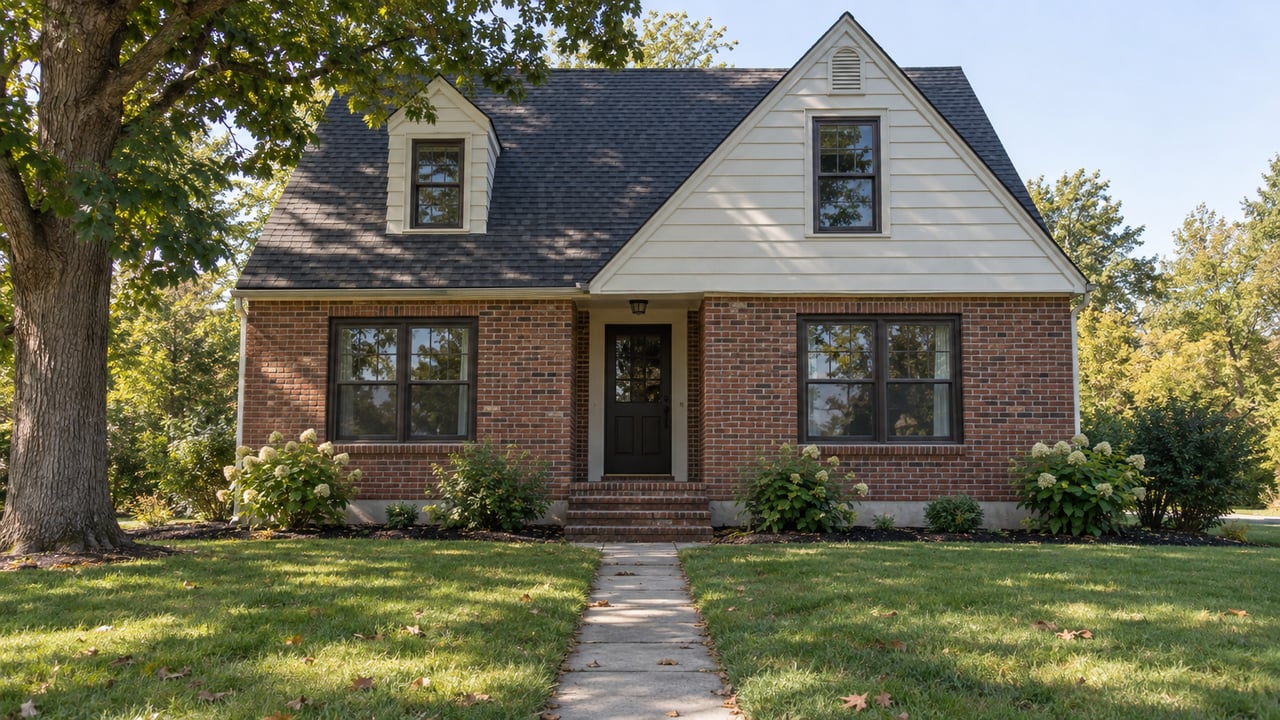
A three-bedroom attached townhouse in the city's North Danada neighborhood can be had for under $300,000. A four-bedroom Georgian-style single-family home a few streets over runs closer to $550,000. A new-construction spec home going up walking distance from the downtown Metra platform is a different animal entirely, four bedrooms, four bathrooms, 3,800 square feet, and priced for a buyer who isn't cross-shopping North Danada at all. Quoting the citywide median to any of these three buyers tells them almost nothing about their own search.
North Danada is the clearest illustration of how wide the internal spread runs. The Danada area splits into East, North, and West sections, each with its own character, and North Danada skews toward bigger and pricier homes than its neighbors. The range backs that up: townhomes there are currently listed between $229,900 and $338,500, while detached four-bedroom Georgian-style homes trade for under $550,000, and new colonial-style construction lists closer to $875,000. At the very top, larger homes with in-ground pools have listed for close to $2 million. That's a single Wheaton neighborhood spanning a seven-figure difference between its cheapest and most expensive product.
Zoom out to the neighborhood's overall numbers and the trailing twelve-month median sale price sits at $360,000, up 9% from the prior year, per Homes.com's tracking. That's roughly $140,000 below the citywide list-price median quoted above. North Danada isn't an outlier dragging the citywide median down. It's evidence that "Wheaton" as a single line item is really a blend of a starter-home submarket, a move-up submarket, and a luxury submarket, each with its own trajectory.
The submarket that pulls the citywide number up sits closer to downtown and the Metra tracks, where land is scarcer and new construction skews upscale. That's the version of Wheaton most out-of-town buyers picture when they hear the name. It is not the version most of the current inventory represents.
The clearest signal of where Wheaton's housing stock is heading isn't a survey. It's what's actually being built, and right now that's happening in two very different places at once.
Downtown, developer Banner Real Estate Group has broken ground on The Faywell, a 334-unit apartment building on the block bounded by Liberty Drive, Hale Street, Willow Avenue, and Wheaton Avenue, directly on the south side of the Metra tracks. The project will include a resort-style pool, a fitness center, a coworking lounge, and ground-floor space for Egg Harbor Cafe, a longtime Wheaton brunch spot. First move-ins are expected this fall. Integra Realty Resources' Ron DeVries called it one of the most significant developments in downtown Wheaton in the last decade, and the rationale he gave is worth sitting with: rising suburban rents combined with a high interest rate environment are keeping people who'd normally buy in rental units longer, which is its own answer to why downtown Wheaton's rental supply is expanding right as its for-sale inventory tightens.
A few blocks out, the picture is different. Davidson Homes broke ground in spring 2026 on a 3,800-square-foot luxury single-family home at 1021 Greenwood Drive, with excavation starting in late April and the foundation poured by mid-May. The home is walking distance to the Illinois Prairie Path, an elementary school, the Metra station, and downtown, and it's built with premium exterior finishes, a three-car garage, and 10-foot ceilings on the main floor. That's new supply aimed squarely at a move-up buyer, not a starter buyer, and it's going up in the same general radius as North Danada's $250,000 townhomes.
Further east, along the Roosevelt Road corridor that runs from Carlton Avenue toward the Glen Ellyn border, the city has been working through a comprehensive plan and zoning update aimed at guiding what gets built on that stretch. One concrete result: developer Quattro Development held a public hearing in April 2026 for a proposed 24,243-square-foot grocery store and a 12,500-square-foot nursery school on a 3.5-acre site at 700-800 E. Roosevelt Rd, a parcel that had sat vacant since a car dealership and transmission shop were demolished there in 2023. Whatever gets approved on that stretch will shape retail access for buyers in both Wheaton and neighboring Glen Ellyn, since Roosevelt Road is the seam between the two towns.
Glen Ellyn is the town Wheaton gets compared to most often, and its reported median is higher. Glen Ellyn's median sale price ran $625,000 in June 2026, per Movoto's tracking, well above Wheaton's September 2026 list-price median, though the figures cover different months and types of prices. But the more useful comparison for a buyer weighing both towns isn't the median. It's price per square foot, because that number strips out the effect of home size and gets closer to what you're actually paying for land and location.
As of Redfin's February 2026 data, Wheaton was running $268 per square foot, up 1.5% year over year. Glen Ellyn, based on Redfin's data for the three months ending in May 2026, was running $328 per square foot. That $60 gap holds up across most property types in both towns, and it's a more honest measure of the premium Glen Ellyn commands than the raw median, which is inflated by Glen Ellyn's larger share of bigger, older homes near its historic downtown.
What that gap buys is walkability and vintage character. Glen Ellyn's core sits inside three National Register historic districts clustered around its Metra station, with 1920s-era homes on uniform setbacks and mature trees. Wheaton's downtown has its own historic core, but the city's footprint is larger and includes more spread-out subdivisions like Danada East, built between 1988 and 1993 with homes ranging from 2,544 to 4,259 square feet. A buyer paying Wheaton's per-square-foot rate in a Danada subdivision is trading downtown walkability for a bigger lot and a newer structure. That's a real tradeoff, not a discount.
The two towns aren't just priced differently. They're drawing from different buyer pools entirely, and Redfin's migration data makes that visible in a way the median never will.
Between October and December 2025, 18% of Wheaton homebuyers searched to move out of Wheaton, while the rest looked to stay within the metro area. Among buyers searching to move into Wheaton from outside the region, Rockford led, followed by Peoria and Springfield. Those are other Illinois cities, which suggests Wheaton is pulling a meaningful share of its incoming buyers from within the state, likely people already familiar with DuPage County's general cost of living.
Glen Ellyn's pattern looks different. Between January and March 2026, only 11% of Glen Ellyn homebuyers searched to leave. Among buyers searching to move into Glen Ellyn from outside the region, New York led, followed by Washington and San Francisco. Those are considerably higher cost-of-living metros, and buyers relocating from them are likely to view Glen Ellyn's prices as a relative bargain against what they left behind, which is a very different frame than an in-state buyer moving from Rockford.
That difference matters for anyone using Glen Ellyn's median as a benchmark for Wheaton. The two towns aren't competing head to head for the same buyer. Glen Ellyn is absorbing higher-income out-of-state relocations that can tolerate a price premium for walkability and vintage character. Wheaton is retaining more of its own buyer pool and pulling from other Illinois markets, which keeps its price growth more tethered to what local incomes can actually support.
Does Wheaton's lower median mean it's cheaper than Glen Ellyn across the board? No. It means Wheaton's citywide median includes a wider range of product, from North Danada's sub-$300,000 townhomes to new luxury construction near downtown. A specific Wheaton home near the Metra corridor can cost as much as a comparable Glen Ellyn home. The city-level median just has more low end pulling it down.
Which part of Wheaton compares most directly to Glen Ellyn's downtown? The blocks immediately around the Wheaton Metra station and the historic core, where new development like The Faywell and the Greenwood Drive spec build are concentrated, are the closest match to Glen Ellyn's walkable, transit-adjacent housing stock. North Danada and the Danada East/West subdivisions are a different product entirely, further from downtown and built on a different era's floor plans.
Is new construction changing the mix of what's available? Yes, in a specific direction. The current projects in the pipeline, the Greenwood Drive luxury build and the Roosevelt Road retail proposal, are adding higher-end product and commercial infrastructure near downtown and the Wheaton-Glen Ellyn border, not in the Danada subdivisions. Over the next year or two, that should widen the gap between downtown-adjacent Wheaton pricing and the rest of the city rather than close it.
If you're comparing Wheaton to Glen Ellyn using the numbers you've already seen on a portal, you're comparing two headline figures that hide more than they reveal. The number that actually matters is what a specific submarket, on a specific block, is doing right now. That's a conversation, not a search filter.
If you want that conversation for your own budget and target neighborhood, The House Plug is a good place to start. Schedule a consultation and we'll walk through which version of Wheaton, or which corner of DuPage County entirely, actually fits what you're trying to buy.
Stay up to date on the latest real estate trends.


Connect with Michael Thurman for expert guidance backed by real investment insight. Whether buying or selling, he’ll help you price strategically and move with confidence.