Lombard House Hacking Guide: A Practical, Local Approach
April 23, 2026
April 23, 2026
Thinking about using rental income to offset your housing costs in Lombard? It can be a smart move, but this is not a market where you want to rely on a loose spreadsheet or assume every basement can become a legal unit. If you want to house hack in Lombard, you need to understand zoning, permits, taxes, and the real rent ranges before you make an offer. Let’s dive in.
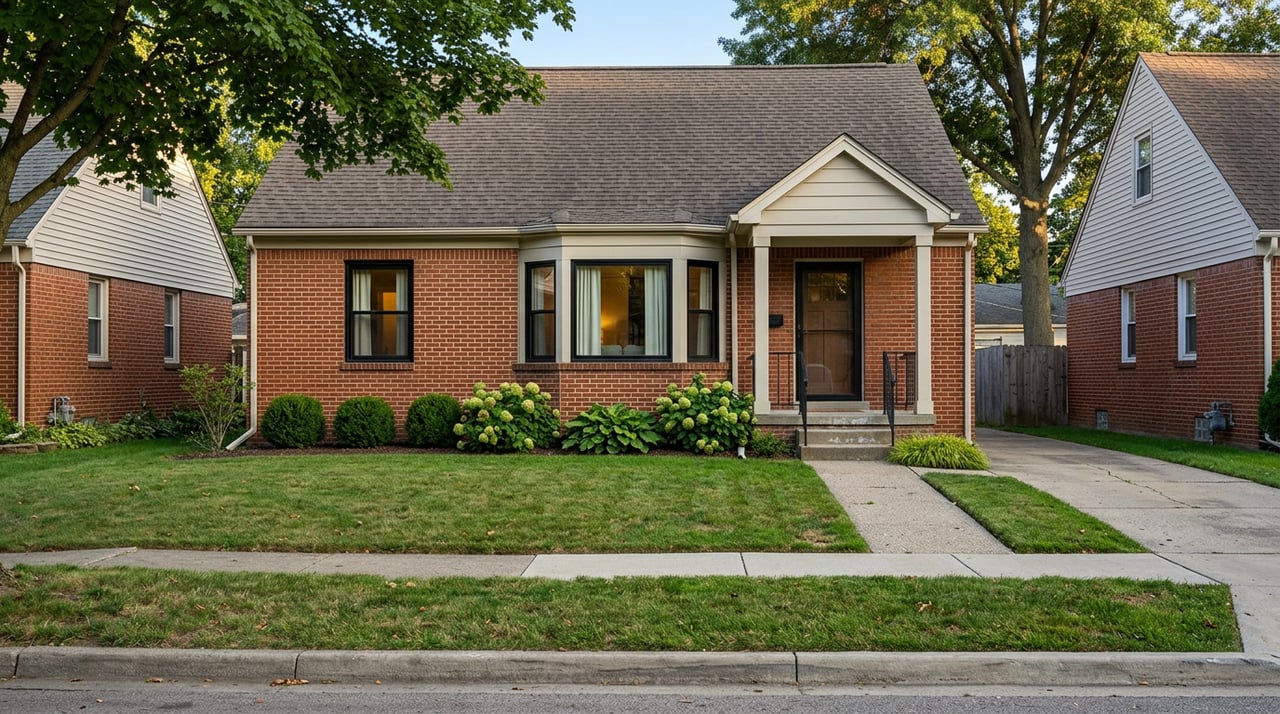
House hacking usually means you live in the property while renting out part of it to help cover your monthly payment. In Lombard, that often points buyers toward a legal 2-flat, a small multifamily property, or a single-family home with a layout that may support shared living if the use fits local rules.
Lombard is a mature suburb that is more than 90% developed, with 18,495 housing units according to the Village and CMAP housing data. About 61.2% of units are in 1-unit structures, while a smaller share sits in 2-4 unit and multifamily buildings, which means true small multifamily opportunities exist but are not the dominant housing type. Many homes are older too, with a median year built of 1971, and a large share built before 1980, which can create flexible layouts but does not guarantee legal conversion potential. You can review the Village’s planning context in the Lombard Comprehensive Plan and CMAP’s Lombard Housing Profile.
A house hack needs two things to pencil out: renter demand and realistic expenses. Lombard has a meaningful renter base, with 5,131 renter households and a median gross rent of $1,834 reported by CMAP. That is enough demand to make the strategy plausible, especially for a clean one-bedroom, lower-level setup, or a small multifamily unit.
Current rent snapshots also support the idea, but with an important caveat. RentCafe’s Lombard rent data shows average apartment rent around $2,037, while the research summary also notes market rent near the $2,000 mark from multiple sources. The practical takeaway is simple: rental income may help significantly, but you should not assume a small unit will carry the entire mortgage on its own.
Not every house hack starts with the same level of risk. In Lombard, the cleaner options are usually the ones that already match existing zoning and use.
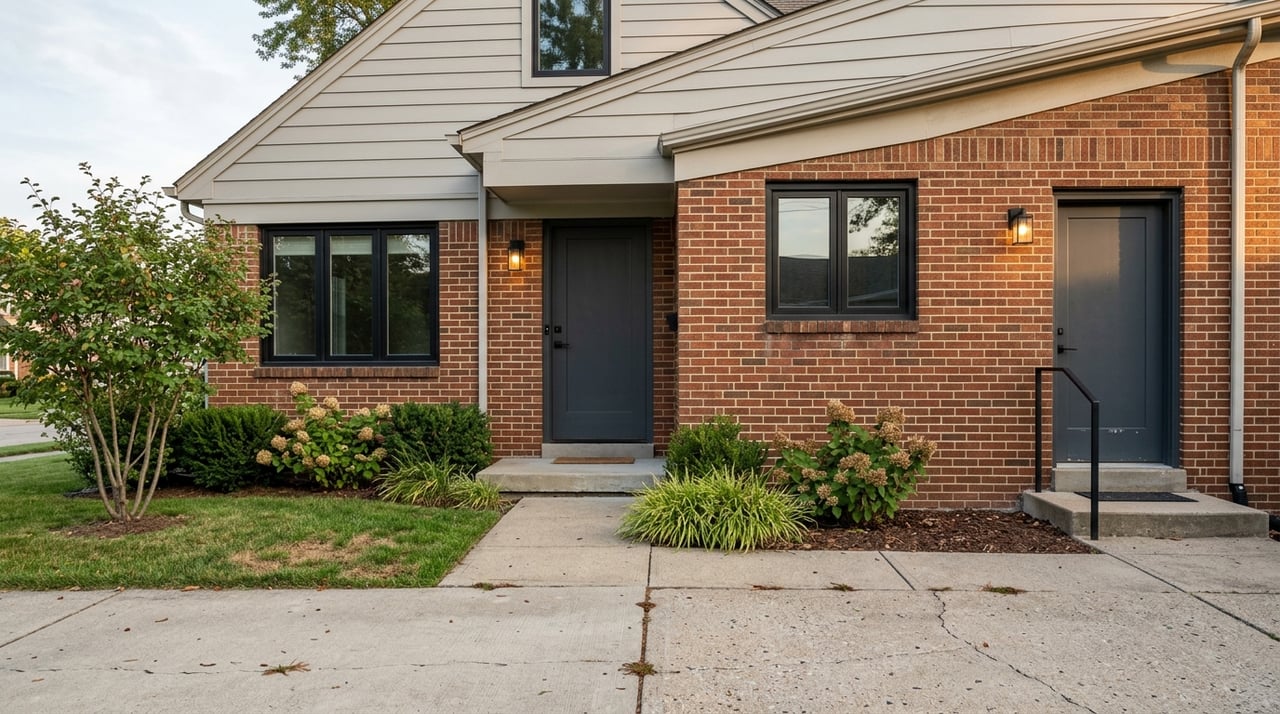
If your goal is the most straightforward version of house hacking, this is often the best place to start. Existing legal 2-flats or small multifamily properties in districts that allow them can reduce the uncertainty around approvals, layout changes, and occupancy rules.
The public code excerpts reviewed show that R3 is intended to allow limited concentrations of duplex, two-family, and attached single-family dwellings, while R4, R5, and R6 allow broader multifamily use. That makes these districts more promising for buyers who want a clearly legal second unit from day one. The zoning framework is summarized in the reviewed Lombard zoning code excerpts.
Some buyers want to start with a detached home and rent out a room, a lower level, or a separate area if allowed. Lombard has a lot of older housing stock, with 39.0% of units built before 1960 and another 37.6% built from 1960 to 1979, so you will find homes with basements, side entries, and floor plans that may look adaptable.
That said, adaptable is not the same as approved. In lower-density districts like R0, R1, and R2, your intended use may be far more limited, so the question is not just whether the layout works. The question is whether the zoning district and code allow what you want to do.
This is where buyers get themselves into trouble if they move too fast. A lower level can look like easy income on paper, but in Lombard it should be treated as a legal and operational risk check first, not a design project.
The Village states that building permits are required for updates to existing structures, and occupancy-related approvals may be required before use. A lower-level rental should be approached as a full code-and-approval project. You can review the Village’s permit guidance on what requires a building permit.
One of the biggest mistakes buyers make is falling in love with a property concept before confirming whether the use is legal. In Lombard, that is a costly mistake because zoning is district-specific.
The practical rule is this: a clearly legal second unit is generally easier to pursue in R3 through R6, or in an existing legal two-unit property, than in R0 through R2. That is an inference from the code structure in the reviewed excerpts, not a blanket approval rule, so you should confirm the exact parcel, district, and intended use with Village staff before you rely on it.
If you are buying with a house-hack plan, this zoning conversation should happen before you finalize your offer strategy. A great deal can stop being a great deal if your income plan depends on a unit that cannot be approved.
House hacking is often framed as a financing strategy, but in a place like Lombard it is also a process-management strategy. If your plan includes creating or changing a rentable area, the permit path matters.
According to the Village, permits are required for all new structures and updates to existing structures. The Village also notes that a Certificate of Occupancy/Zoning Certificate is required before occupancy in several scenarios, including new residential buildings, new owners, and certain changed uses, and that a Life Safety Fire Inspection is required before occupancy of new or existing tenant spaces or new multifamily occupancies. Those requirements are why conservative buyers treat conversion costs and approval timelines as part of acquisition underwriting, not as afterthoughts.
In a strategy like this, optimism is expensive. You want rent assumptions that can survive normal vacancy, turnover, and softer-than-expected market response.
Based on the market snapshots in the research report, a conservative underwriting range in Lombard is roughly:
Those are planning ranges based on recent market snapshots, not guarantees. Actual rent will depend on unit size, condition, privacy, parking, utility setup, and whether the space is clearly legal and move-in ready.
In Chicagoland suburbs, taxes often decide whether a house hack feels comfortable or tight. Lombard is no exception.
DuPage County’s 2024 tax rate booklet shows Lombard’s tax code rate at 7.7695, and Illinois generally assesses most property at one-third of market value. Using that framework, the research report estimates an effective tax burden of about 2.6% of market value before exemptions. As rough planning examples, that is about $755 per month on a $350,000 home and about $971 per month on a $450,000 home, before you layer in insurance, utilities, and reserves. You can review the county source in the 2024 DuPage County tax rate booklet.
For investor-minded buyers, this is where conservative underwriting matters most. A deal that looks great before taxes can become marginal very quickly once real carrying costs are plugged in.
If your strategy depends on a lower-level unit, you also need to think about water and sewer risk. This is especially important in older suburbs where infrastructure history can affect long-term operating costs.
The Village says roughly one third of Lombard still has combined sewers, and sewer backups can occur when system capacity is exceeded. The Village also notes that overhead sewer systems are required in all new construction and that water customers pay a monthly fixed capital fee. For a lower-level rental, sewer history, drainage, and flood mitigation are not side notes. They are part of the investment case. The Village’s guidance is outlined in its combined sewers FAQ.
Before you make an offer, try to answer the same core questions every time. This helps you avoid buying a problem disguised as an opportunity.
Start with the parcel’s zoning district and current legal use. If the property is marketed with extra living space or an in-law arrangement, verify whether that setup is legally recognized and occupiable under current Village rules.
If your plan involves a basement apartment, lower-level suite, or reconfigured unit, confirm what permits, inspections, and occupancy approvals would be required. A contractor opinion is not enough by itself. You want clarity from the Village before you base your numbers on future rent.
Run the deal with conservative rent, full taxes, insurance, utilities, maintenance reserves, and vacancy. Then ask what happens if rent comes in below plan or if conversion work costs more than expected.
For any home where the lower level matters to the strategy, look closely at water intrusion history, sewer backup risk, drainage improvements, and mitigation steps already completed. This is not a minor inspection item when the downstairs space is central to the deal.
In Lombard, the best house hacks are usually the ones with the fewest assumptions. A legal 2-flat or small multifamily property often carries less execution risk than a single-family conversion that depends on approvals, layout changes, and perfect rent assumptions.
That does not mean single-family options cannot work. It means the path needs to be disciplined. If you buy in Lombard with an investor mindset, your edge is not hype. Your edge is confirming the legal use, underwriting taxes and operating costs honestly, and choosing a property where the exit still makes sense if the rental plan underperforms.
If you want a strategy-first look at whether a Lombard property actually works as a house hack, connect with Mike Thurman for a consultation.
Stay up to date on the latest real estate trends.
Connect with Michael Thurman for expert guidance backed by real investment insight. Whether buying or selling, he’ll help you price strategically and move with confidence.